SPPB Test Protocol

Step-by-step administration guide for the Short Physical Performance Battery (SPPB). The three subtests are typically administered in the order: balance → gait speed → chair stand. Total time: 10–15 minutes manually; under 3 minutes with AndanteFit. The SPPB was originally developed by Guralnik and colleagues and has been widely used in epidemiological and clinical studies of aging. It is now commonly used as a standardized measure of lower-extremity function in both clinical practice and research.

1

Balance Test

The balance test assesses postural stability through three progressively challenging standing stances. It is the first subtest administered because it requires the least exertion, allowing the assessor to identify participants who may need closer supervision during subsequent tests.

What it measures: Static postural control, fall risk, early-stage functional decline.

Setup

  • 1Participant stands near a wall or sturdy surface for safety. Shoes are worn.
  • 2Assessor demonstrates each stance before timing begins.
  • 3Arms may hang freely at sides; hands must not be held by assessor during timed holds.

Procedure

  • 1Side-by-side stand: Feet placed together, medial borders touching. Hold for 10 seconds. If unable to hold ≥10s, score = 0 and test ends.
  • 2Semi-tandem stand: Side of one foot placed against the big toe of the other foot. Hold for 10 seconds. If unable, score = 1 and test ends.
  • 3Full tandem stand: Heel of one foot placed directly in front of, touching, the toes of the other foot. Timed up to 10 seconds.

The test ends when balance is lost or the assessor ends the trial.

Scoring
0Cannot hold side-by-side for 10s
1Side-by-side ≥10s; semi-tandem <10s
2Semi-tandem ≥10s; full tandem <3s
3Full tandem 3–9.99s
4Full tandem ≥10s
2

Gait Speed Test

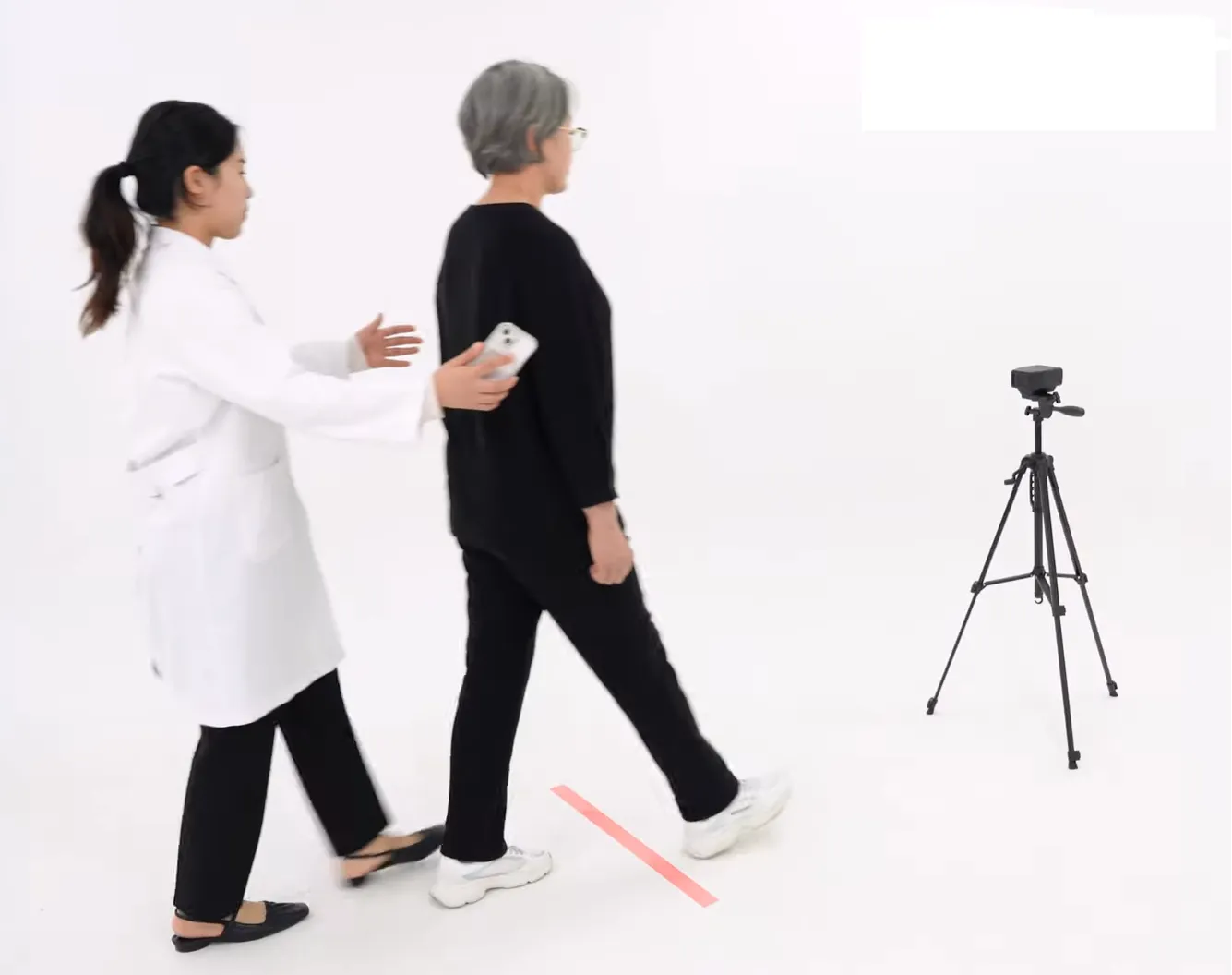
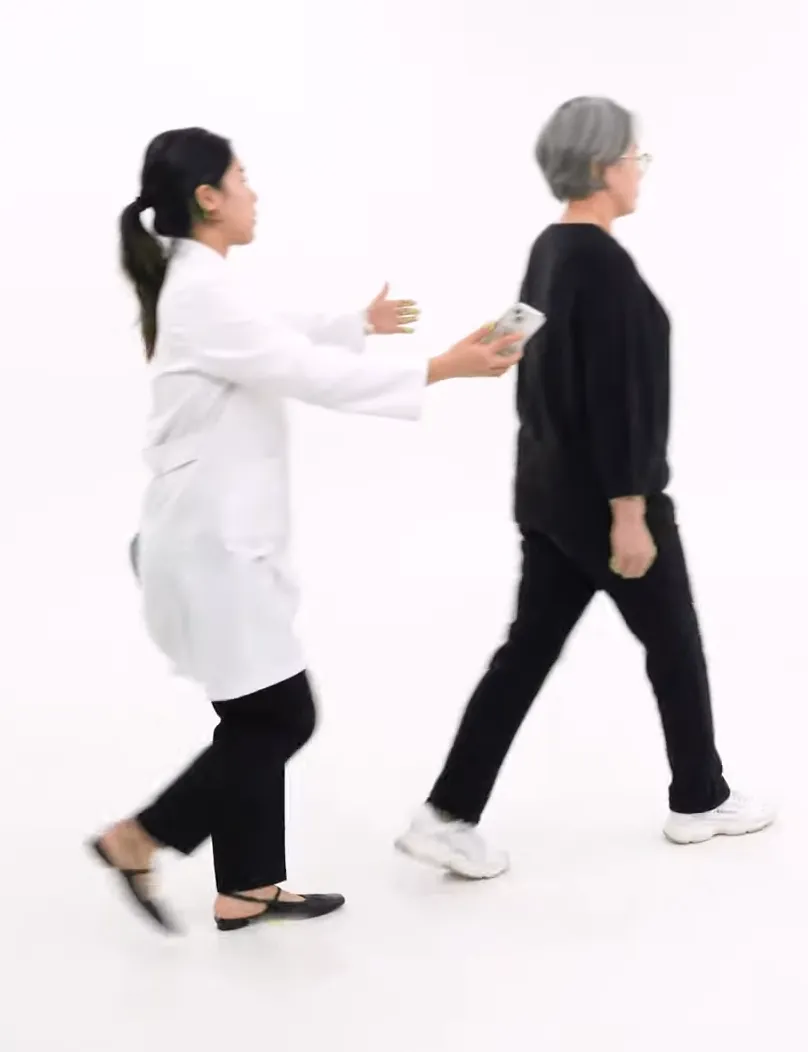
Gait speed is one of the most powerful single predictors of health outcomes in older adults, including mortality, cognitive decline, hospitalization, and functional disability. The 4-meter walk is the standard SPPB distance, though 6-meter variants are used in some protocols.

What it measures: Functional mobility, systemic health, frailty and sarcopenia risk.

Setup

  • 1Mark a 4-meter course with clear start and end lines on a flat, unobstructed surface.
  • 2Participant may use their usual walking aid (cane, walker). Record if an aid is used.
  • 3Participant starts from a static standing position behind the start line.

Procedure

  • 1Instruct participant to "Walk at your usual pace, as if walking down the street."
  • 2Start timing when the participant begins walking.
  • 3Stop timing when the leading foot crosses the end line.
  • 4Perform two trials; use the faster time for scoring.

Score 0 if participant cannot attempt the walk or requires physical assistance.

Scoring (4-meter walk)
0Unable to complete
1≥8.70s (<0.46 m/s)
26.21–8.70s (0.46–0.64 m/s)
34.82–6.20s (0.64–0.83 m/s)
4<4.82s (>0.83 m/s)
3

Chair Stand Test

The five-times sit-to-stand test assesses lower-extremity muscle strength, power, and functional neuromuscular control. It is the most demanding subtest and is administered last to avoid fatigue confounding the earlier subtests.

What it measures: Lower-extremity muscle strength and power, functional capacity for daily activities such as rising from a chair.

Setup

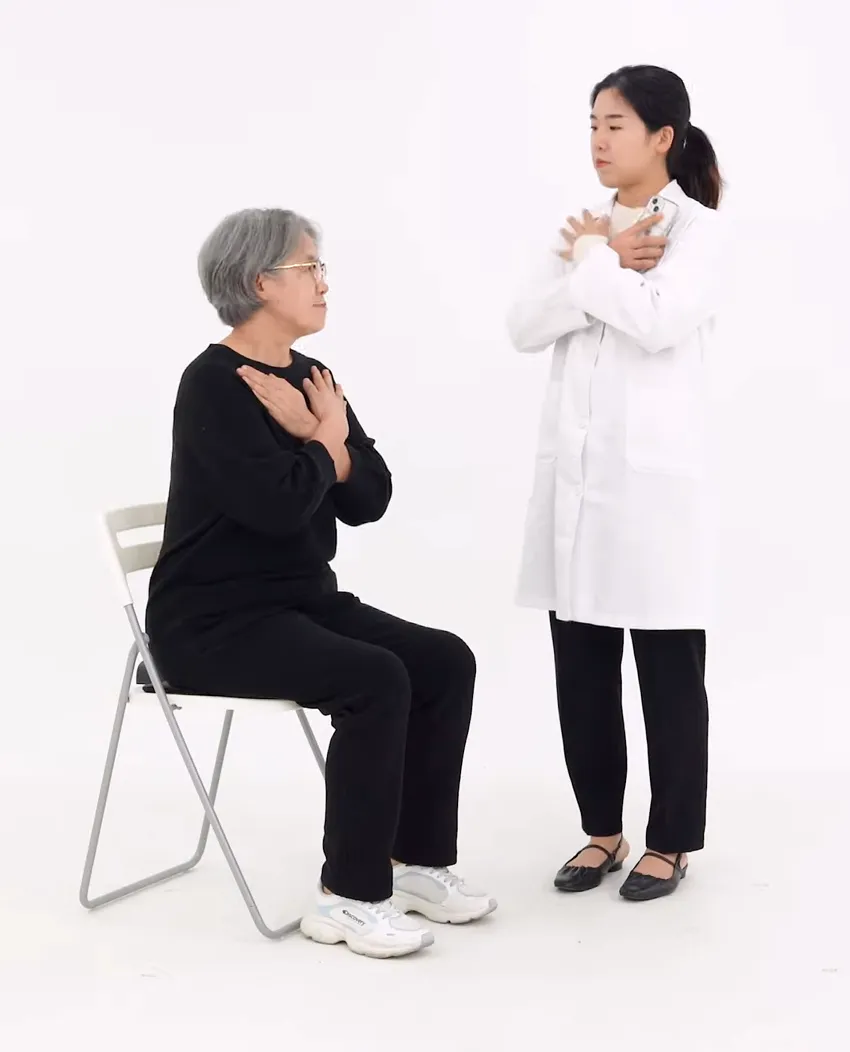
  • 1Use a firm chair with a seat height of approximately 43–45 cm (17 inches), without armrests if possible.
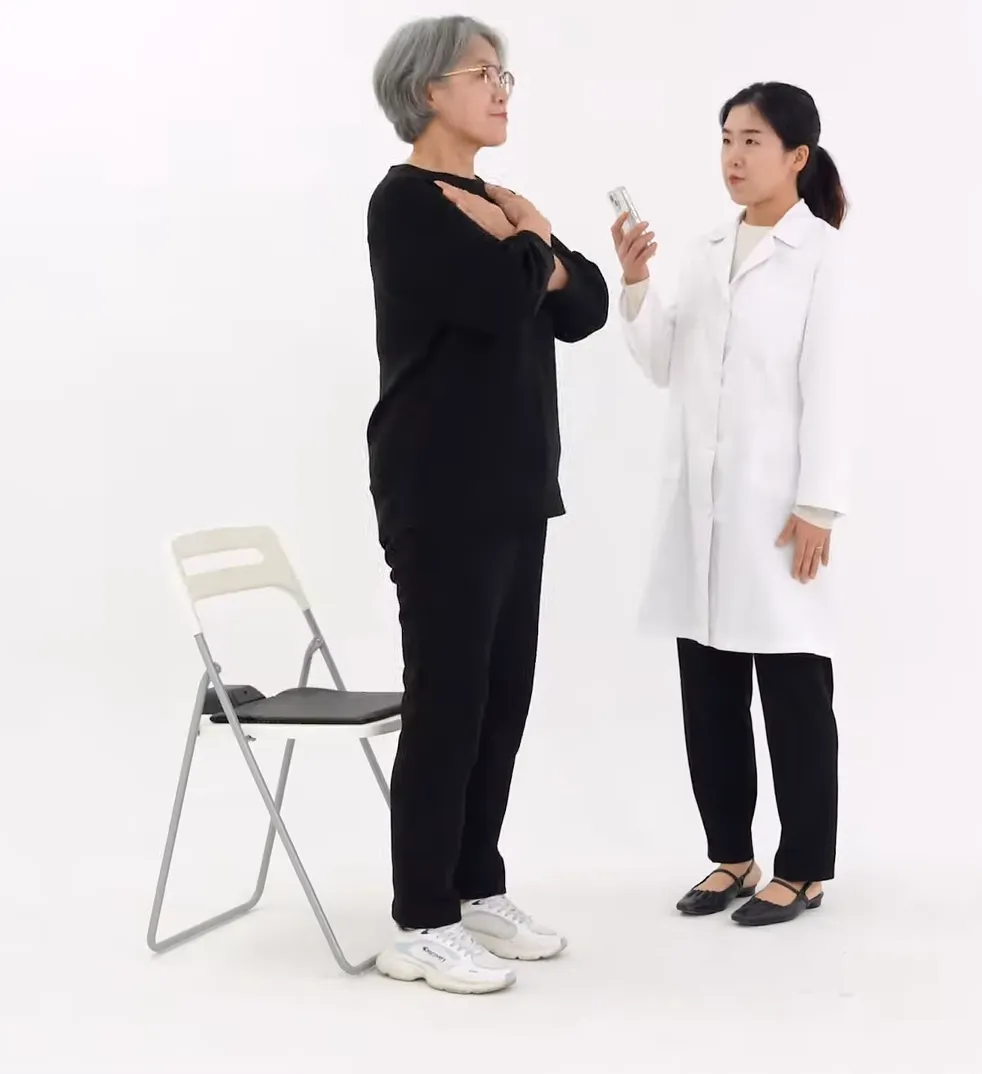
  • 2Participant sits with arms folded across their chest. Feet are flat on the floor.
  • 3First, have participant rise once to verify they can complete the movement without arm support.

Procedure

  • 1Instruct the participant: "Please stand up and sit down five times in a row as quickly and safely as possible without using your arms."
  • 2Start timing when the participant begins the first stand.
  • 3Stop timing when the participant reaches the fully standing position on the fifth stand.
  • 4Score 0 if the participant uses the arms or takes more than 60 seconds.
Scoring (5× sit-to-stand)
0Unable to complete; uses arms; >60s
1≥16.70s
213.70–16.69s
311.20–13.69s
4<11.20s

Total SPPB Score

Sum the scores from all three subtests (each 0–4) for a total of 0–12.

Total ScoreCategoryClinical interpretation
0 – 6Severe impairmentHigh risk; priority for preventive and rehabilitative intervention.
7 – 9Moderate impairmentIntermediate risk; greatest benefit from exercise intervention.
10 – 12Normal to goodLower risk; monitor longitudinally for early functional decline.

A change of ≥1 point has been proposed as a minimally important clinical difference in many populations. Always interpret subtest profiles alongside the total score to guide targeted intervention.

Standardize SPPB Administration with AndanteFit

Manual SPPB administration requires a stopwatch, marked floor distances, and consistent technique across assessors and sessions. In practice, manual timing and differences in instruction can introduce inter-rater variability, particularly in large screening programs or multi-site studies.

AndanteFit replaces manual timing with multi-sensor automation—capturing gait speed via LiDAR, chair stand timing via motion tracking, and balance duration via a precision sensor platform. All three subtests are completed in under 3 minutes with no trained operator required at each session.

What is SPPB? Validation Evidence About AndanteFit